Kyoto with Children: The Monkeys Are a Hike and the Deer Bite
Updated September 17, 2026 · 8 min read
Kyoto is a city of temples, gardens and rooms you are asked to be quiet in. Parents arrive braced for a week of that, and then discover the city has exactly two things children ask for by name — the monkeys in the west and the deer in Nara.
Both are real, both are worth the day, and both are misunderstood in the same way: they are described as attractions and they behave like animals on a hillside.
The monkeys are twenty minutes uphill
Iwatayama Monkey Park is not an enclosure you walk into. The macaques live loose on the top of a hill above Arashiyama, and the only way up is on foot.
The operators say it more bluntly than the guidebooks do. One describes the access as “a short hike (15–20 minutes) through a steep path” and asks guests to be “in a reasonable physical condition”. Another writes that it “requires a 20-minute uphill hike and several flights of steps”, and adds that in summer its guides sometimes do not make the climb at all, because repeating it in the heat is punishing — the last hour then becomes self-guided.
Think about that for a small child on a hot afternoon before you build a day around it.
The practicalities are simple and easy to get wrong:
| Admission, adult | ¥800 |
| Admission, child 4–15 | ¥400 |
| Under 4 | free |
| Hours | 9 am – 4 pm, summit open until 4:30 pm |
| Closes earlier | when the monkeys head back up the mountain |
| Payment | cash, at the gate, on the day |
There is no advance ticket and no reservation. Bring the cash.
The deer are wild, and the danger has a timestamp
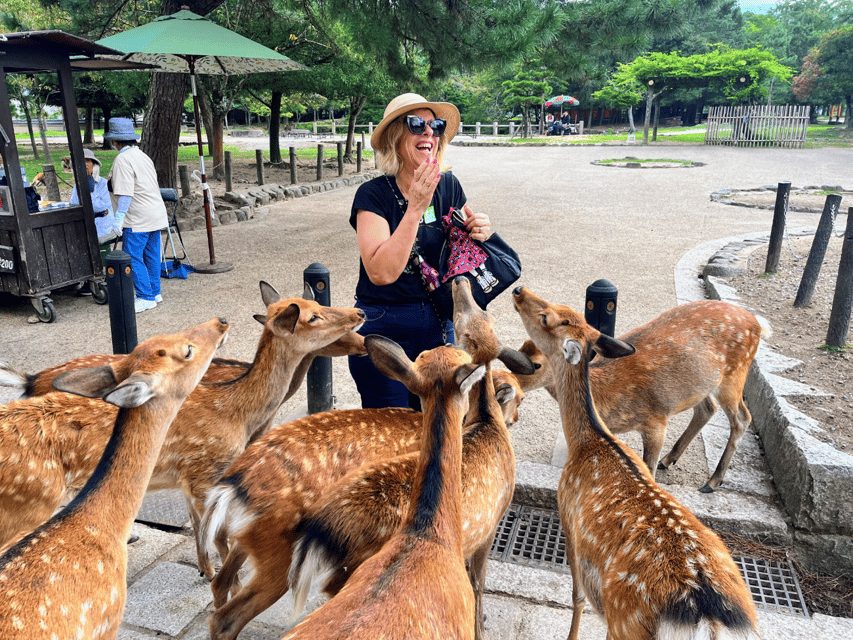
Nara Park’s sika deer are the single best hour of most family trips to Kansai, and the one place where “it will be fine” is not good enough.
They are not park animals. They roam free, they are used to people, and they are strong. The local rules are short: feed them nothing but the shika senbei crackers sold in the park, give them no paper, plastic or rubbish, and do not tease or harass them. Since April 2025 the prefectural park ordinance explicitly prohibits harmful acts towards them.
The number that should change how you handle it: about 72.5 per cent of recorded incidents in the 2022 financial year happened around the crackers — buying them, feeding them, or in the moment just afterwards. Not while walking. Not while photographing from a distance. At the feeding.
What follows from that is practical, not fearful:
- Do not hold a cracker up for a photograph. Holding food out of reach to get the shot is the behaviour that gets people nipped — the deer will go for your hand, your sleeve or your bag to get attention.
- A small child should hold the crackers firmly or not at all. Deer become assertive the moment food is visible, and a child at deer height with food in an open hand is the exact configuration to avoid.
- Buy the crackers away from your child, not in their hands. The purchase itself draws a crowd.
- Never touch a fawn. Mothers defend them.
The park has installed illustrated warning signs covering the behaviours to watch for, biting among them. They are worth stopping to read; they are not decoration.
There is a second set of hazards we cover under Kansai from Kyoto rather than repeat here — what the deer do to paper maps, tickets and paper bags, and why you do not want a small child standing between a stag and a cracker seller. Read that section too if Nara is happening.
A guided morning tour to Nara from Kyoto is €67.04 with 440 reviews. The alternative most families find first, the Nara, Fushimi Inari and Arashiyama bus tour at €45.39, holds 4.8 stars from 3,281 reviews and is cheaper — but it runs nine hours. With children under about eight, the morning tour is the better buy even at the higher price, and the fare difference is the smaller cost of the two.
For how the trains to Nara actually work, and why the cheapest ticket costs you half an hour of walking at the other end, see Kansai from Kyoto.
Age limits: no pattern, no city rule, check every listing
This is where family plans break, and it is entirely avoidable. Minimum ages in Kyoto are set by each operator, they differ wildly, and they are never in the summary.
Real examples from listings we track:
- a ramen, gyoza and onigiri cooking class — not suitable for children under 12
- a kintsugi workshop repairing ceramics with gold — not suitable for children under 10
- a rickshaw tour in Arashiyama — adult pricing applies from age 6
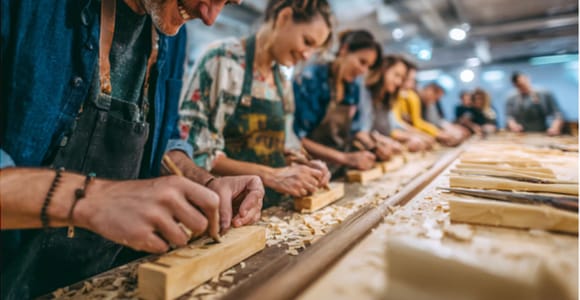
- a chopstick-making class in Gion — no stated age limit, described as suitable for beginners
Four listings, four different answers, one hour apart on foot. There is no band you can assume and no logic by activity type. The line is on the booking page under “Not suitable for”, and it is the first field to read. More on how these classes differ is in what Kyoto craft workshops actually give you.
One warning about inclusion lists. One cooking class we checked lists “Vegan / Pescatarian / Gluten-Free options” among its inclusions and, on the same page, states it is not suitable for vegans or people with gluten intolerance. Both sentences are the operator’s. If an allergy or a diet in your family depends on the answer, write and ask before you book — do not book on the strength of the inclusions line.
Strollers lose to Kyoto
If you are travelling with a pushchair, the constraint is not distance, it is surface.
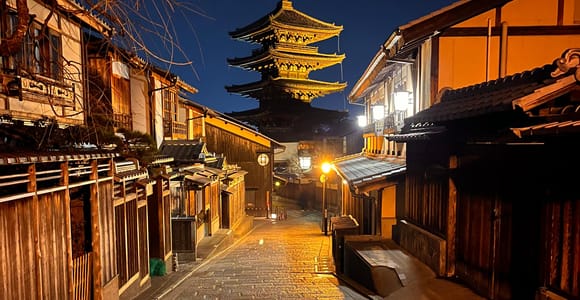
One Arashiyama operator states it directly: their tour is not suitable for wheelchair users or guests with strollers, “due to the numerous steps at Tenryū-ji and gravel-covered pathways that can be difficult to navigate”. That is an accurate description of most of old Kyoto — raked gravel, temple thresholds, stone steps and the steep lanes up to Kiyomizu-dera.
The one exception worth knowing: a rickshaw through the Arashiyama bamboo forest — €44.69, 539 reviews — is described by its operator as stroller-friendly, with runs from 45 minutes upwards. The same page says it is not suitable for pregnant women or people with back problems. Ask them which applies before paying. The wider picture on surfaces and access is in Kyoto with limited mobility.
What actually works with children here
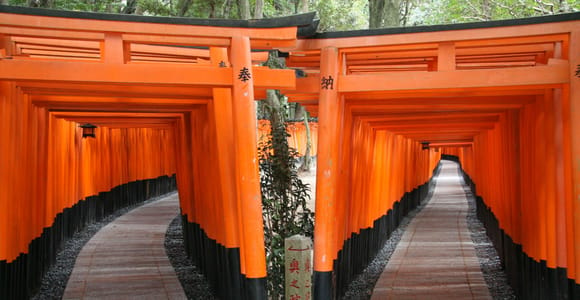
- Start early. The free things — the bamboo path, the Fushimi Inari approach, the Higashiyama lanes — are pleasant at 7 am and a crush at 11.
- One ticketed temple a day, not four. Children run out of gardens long before adults do, and the fees add up: see temple hours and tickets.
- Carry cash. The monkey park, the cracker sellers and a surprising number of small studios take nothing else.
- A tea ceremony means kneeling. If a child cannot sit still on the floor, say so when booking — the options are set out in what a Kyoto tea ceremony gets you.
- Know when to skip it. A nine-hour bus day, a steep climb at 35 °C or a formal tea room with a toddler are three ways to lose an afternoon. There is no shame in the river, the bamboo path and an early dinner.
Guided options that suit a family day are on the day trips from Kyoto page and among the Arashiyama tours.
Ages, inclusions and suitability above are quoted from the operators’ own booking pages; the park fees, hours and deer rules from the park and prefectural sources, on the date at the top. Confirm anything your day depends on directly with the operator — especially an age limit.